


Original price was: $59.99.$41.99Current price is: $41.99.
- 7-Day Returns, 100% Quality
- Multiple safe payment methods
- Have the best deals
- Get the Best for Less

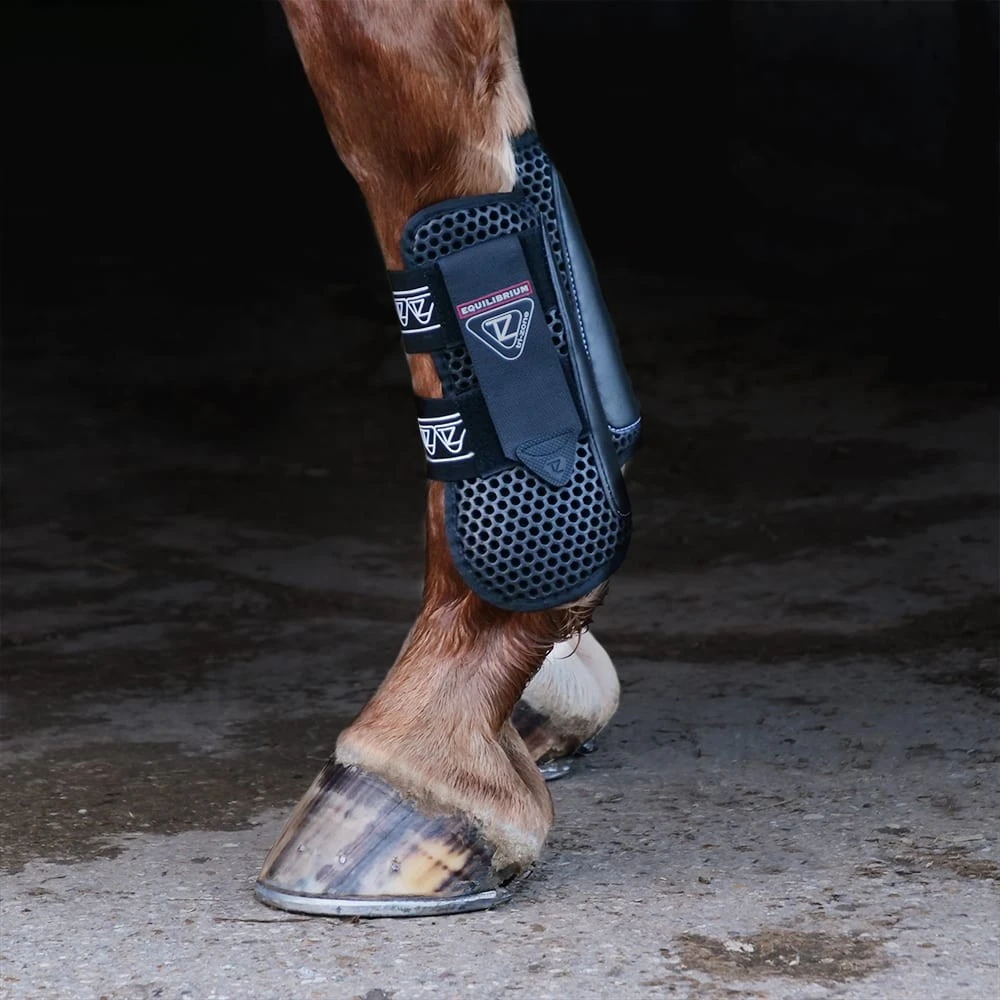
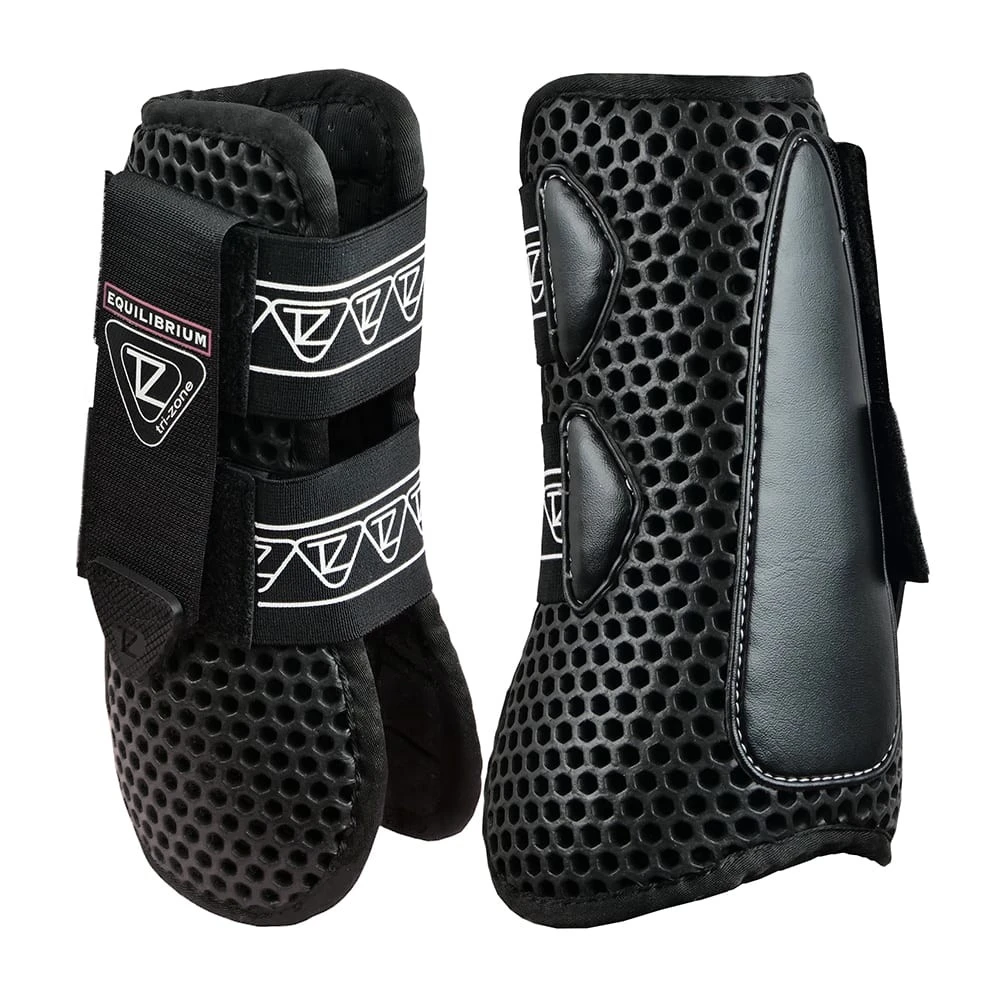
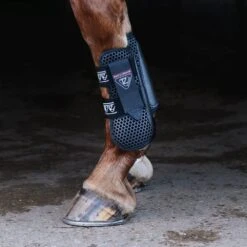
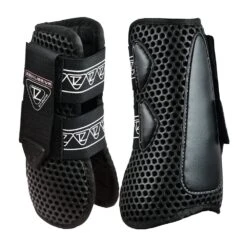
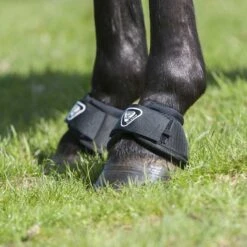
The Equilibrium Tri-Zone Open Fronted Tendon Boots flexibly mould to your horses leg, without restricting movement and are so light and breathable your horse won’t realise he’s wearing them. BS legal.
The Equilibrium Tri-Zone Tendon Boots are the only ones you will ever need, they are so easy to keep clean, you can wear them everyday and for competitions. Plus they don’t include the hard restrictive outer casings that many on the market have.
- Safety tested in an independent laboratory
- Breathable to reduce heat
- Doesn’t restrict movement, flexible and moulds to horses leg
- Lightweight
- Doesn’t hold water
- Five-layer protection system
- Matches perfectly with the Tri-Zone Fetlock Boots
- Sold in pairs
What is the inspiration behind the Open Fronted Tendon Boots?
There are so many things to consider when purchasing horse boots, that we wanted to offer a boot where you didn’t have to compromise at all. Generally if you go for a hard shell/very protective boot, it can be heavy, inflexible and unbreathable. Likewise, a lightweight boot might be more breathable and flexible, but won’t offer the protection that is needed. The Tri-Zone Open Fronted Boots offers protection that is tested, yet still retains all the other desired features to keep your horse comfortable and their legs in good shape!
Protection provided by the Tri-Zone Open Fronted Tendon Boots
The boot design uses a five-layer system, each chosen for their unique properties
The first layer is provides a inner lining that sits against the horses’ leg. Made from perforated EVA (Ethylene-Vinyl Acetate), the liner sits comfortably against the leg. The perforations allow heat to escape and aids breathability, while the flexibility of the material allows it to mould to the horses’ leg.
Layer two is a strong nylon mesh. This adds another layer of protection to the boots, but also stops any debris making its way into the boot towards your horses’ leg.
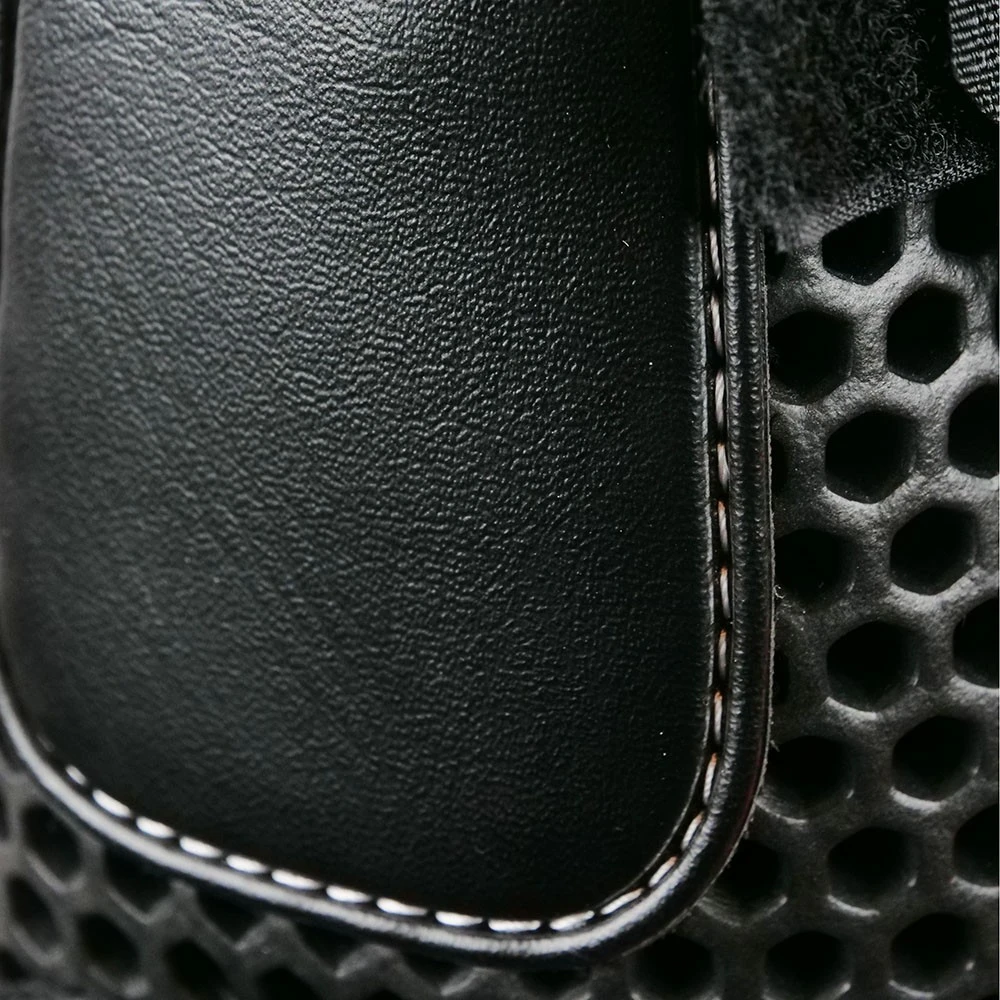
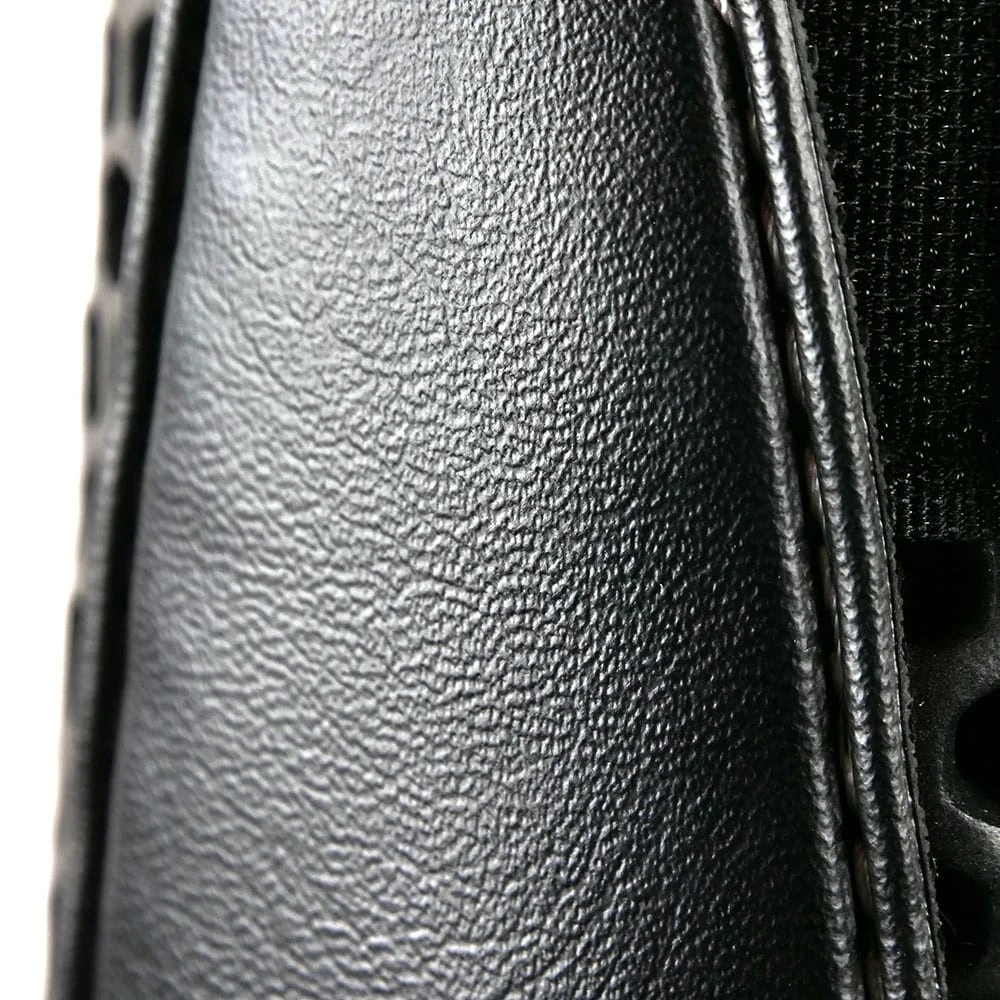
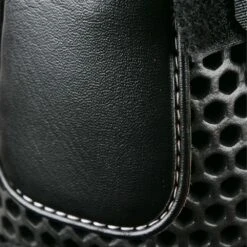
Layer three is the internal guard made from vinyl – a string, durable and moisture resistant material. This layer is placed over the vulnerable tendon area and is made with strips of material to allow it to mould around the horses leg. This allows the horse to move freely without the feeling of a ‘splint’.
The fourth layer is a EVA waffle. Commonly used in the soles of human shoes and as padding on sports equipment, this material is durable, breathable, and protective! We’ve made sure it’s easy to clean and maintain too!
Finally, layer five includes strategically placed vinyl strike guards. These are placed down the vulnerable tendon area for maximum protection.
Boot Testing
As riders, we protect our most vital areas (head and torso) with riding hats, body protectors and more recently air jackets. Rider protective equipment is subjected to extensive testing to meet standards and regulations and we believe that as a vital part of your horse, protective boots for your horse’s legs should undergo a similar testing process.
Tri-Zone boots go through a unique 3-phase testing process giving you confidence that you are choosing the best leg protection for your horse. Materials are carefully selected to provide maximum protection but without being bulky, heavy and not make your horses legs hot and sweaty. Each individual layer in the Tri-Zone boot is researched and sourced for their advanced technical properties and tested in an independent laboratory before it goes anywhere near a horse’s leg.
What is the Testing Process?
Testing Phase 1
In the same laboratory that test standards of riding hats and body protectors, Tri-Zone boots are safety tested to their limits for their ability to withstand concussion and penetration whilst remaining lightweight, breathable and flexible.
For concussion and penetration the testing is carried out using a custom made test rig consisting of a tower from which either a blunt hammer or a cutting blade is dropped onto the boots in a controlled fashion. The weight of the blade and hammer are fixed and different forces are applied to the boots by varying the height from which they were dropped onto the boots. Boots were hit with forces ranging from 1.25 to 20 Joules. These forces were chosen as being those likely to occur in the horse during exercise, for example when hitting obstacles or over-reaching. Equilibrium used a carrot at 5 joules to replicate the soft tissue in a horses’ leg hitting an obstacle.
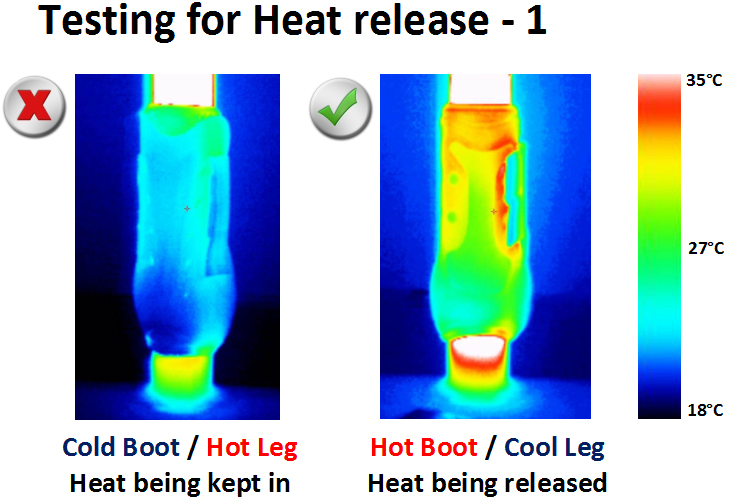
Equilibrium test boots to measure how well the boots allow heat to escape in order to reduce the risk of tissue damage.
Research has shown that when tendon cells are heated to 48°C for 10 minutes approx, 80% of them die. Equilibrium use several different methods to assess heat release from boots. The heat release is estimated by fitting the boots to a metal flask containing water at 45°C in a room at 20°C with no significant radiation. The surface temperature of the boots is measured using a thermal camera. The hotter the outside surface of the boot, the more heat has been allowed to escape.
If boots are constructed of inflexible (i.e. stiff) material or if boots are applied too tightly, they have the potential to restrict joint movement and cause other problems such as tendonitis. Stride characteristics and performance could also be affected. Boots need to allow as much freedom of movement as possible without compromising on their primary function of protection. Equilibrium test boots to make sure that they do not restrict the horse’s movement whilst still exceeding protection requirements. An 8cm x 1m steel pipe is set up secured to a workbench. The boots are fixed to the pipe and a 10kg weight is attached with a clip on the boot and the downward direction measured. The degree of flexibility is measured by how much the boot bends.
Adding even small amounts of weight to the end of the leg in the form of a boot significantly increases the effort the horse must make to run and can also alter the stride characteristics. Some boots can double in weight if the horse is being exercised in the rain, on wet ground or going through water. This can seriously affect stamina and performance. Equilibrium design and test our boots to minimise water absorption, excess weight but without compromising on protection.
Testing Phase 2
The boots then undergo trials by an extensive tester panel of horse owners and riders who test them for the fit, comfort, ease of use and washing to ensure Equilibrium have not only a safe product, but one that people can easily use and trust.
Testing Phase 3
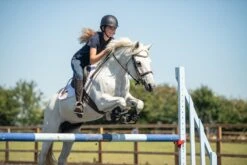
Finally the boots go through the rigorous test of being used all day, every day on busy competition yards by teams of professional riders. The Tri-Zone Impact Sports boots are worn either at home or at competitions by an array of Olympic riders, world champions and top producers.
Be the first to review “Equilibrium Tri-Zone Open Fronted Tendon Boots (Black)”
Related products
Horse Boots
Horse Boots
Bandages & Pads
Horse Boots
Cross Country Boots

Horse Boots

Horse Boots
Reviews
There are no reviews yet.